Human-First AI Pulse
Current research behind building with AI without losing your humanity. Posted here weekly by Dr. Johnna.
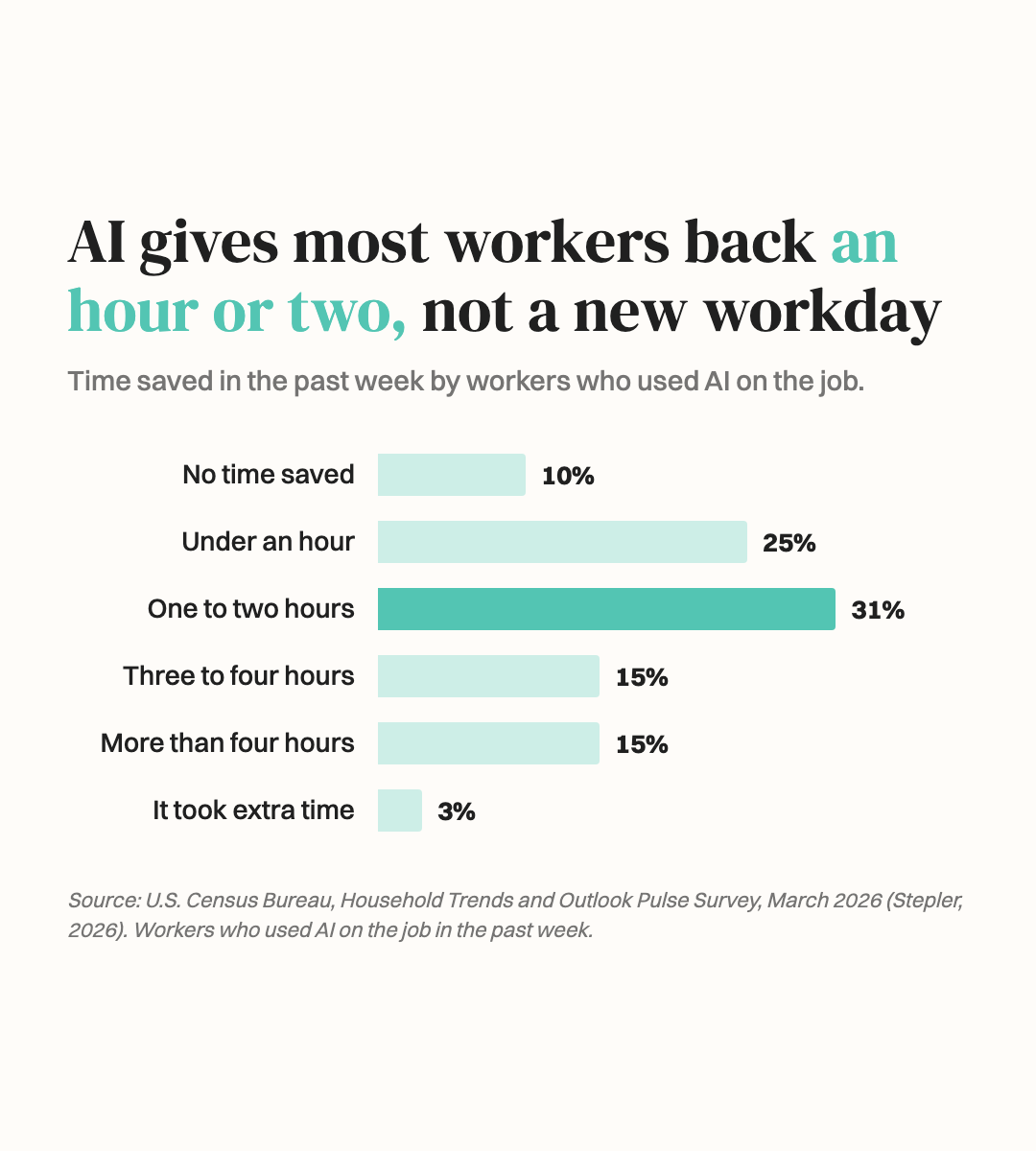
AI hands back an hour or two, not a new workday
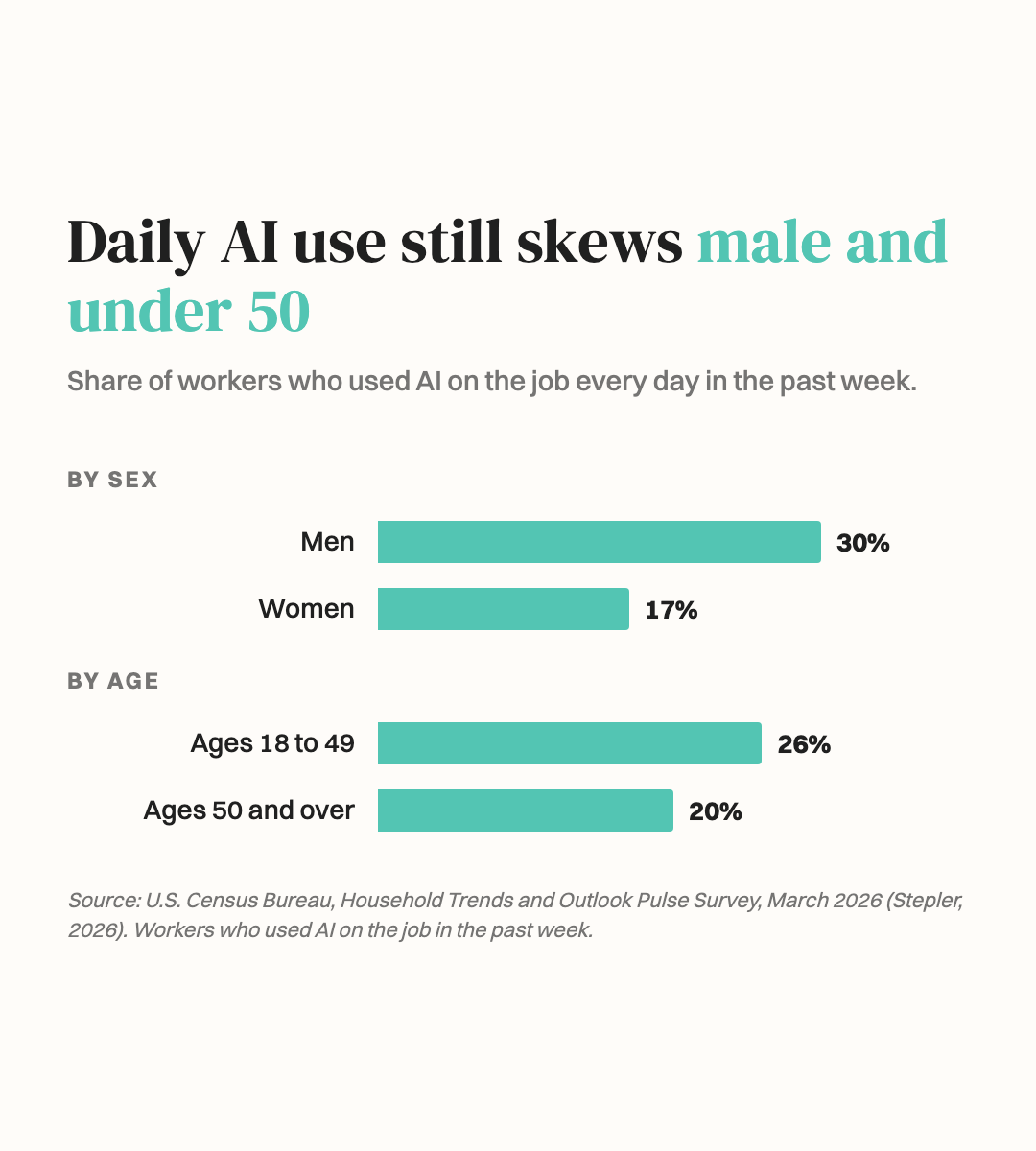
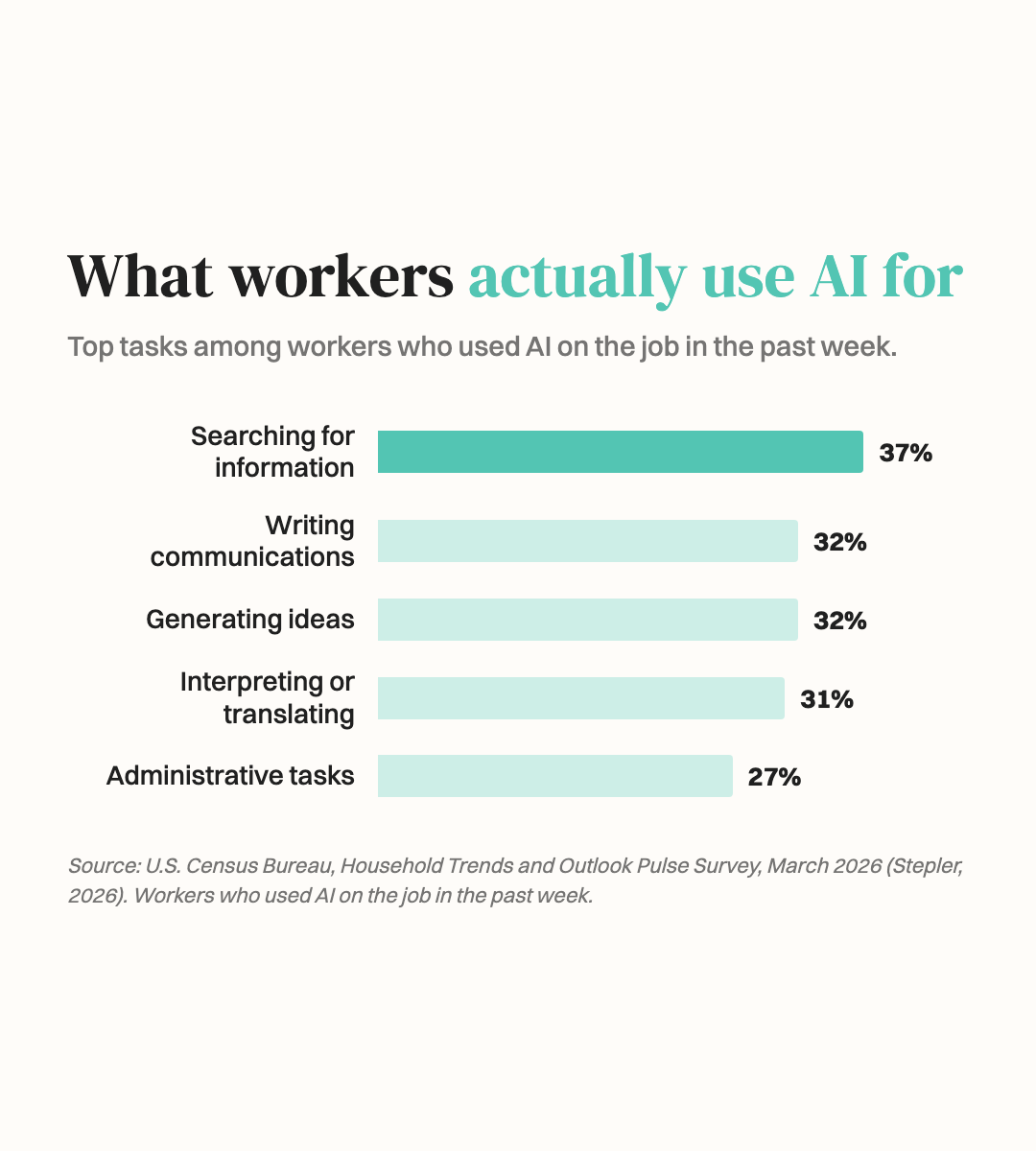
The Energy CostThe U.S. Census Bureau asked workers across the country how they use AI on the job, and the answers are smaller and more human than the headlines (Stepler, 2026). About 55 percent of workers have used it for at least one work task. Among those who saved time in the past week, the most common answer was one to two hours, reported by 31 percent. Daily use skews male (30 percent of men versus 17 percent of women) and under 50. The top task isn't futuristic at all: searching for information. This is government survey data, not a vendor pitch, and it describes a modest, human-sized tool. An hour or two back in your week won't transform your business. It can restore something smaller and more valuable: a little margin. The hours AI returns are only yours if you decide where they go.
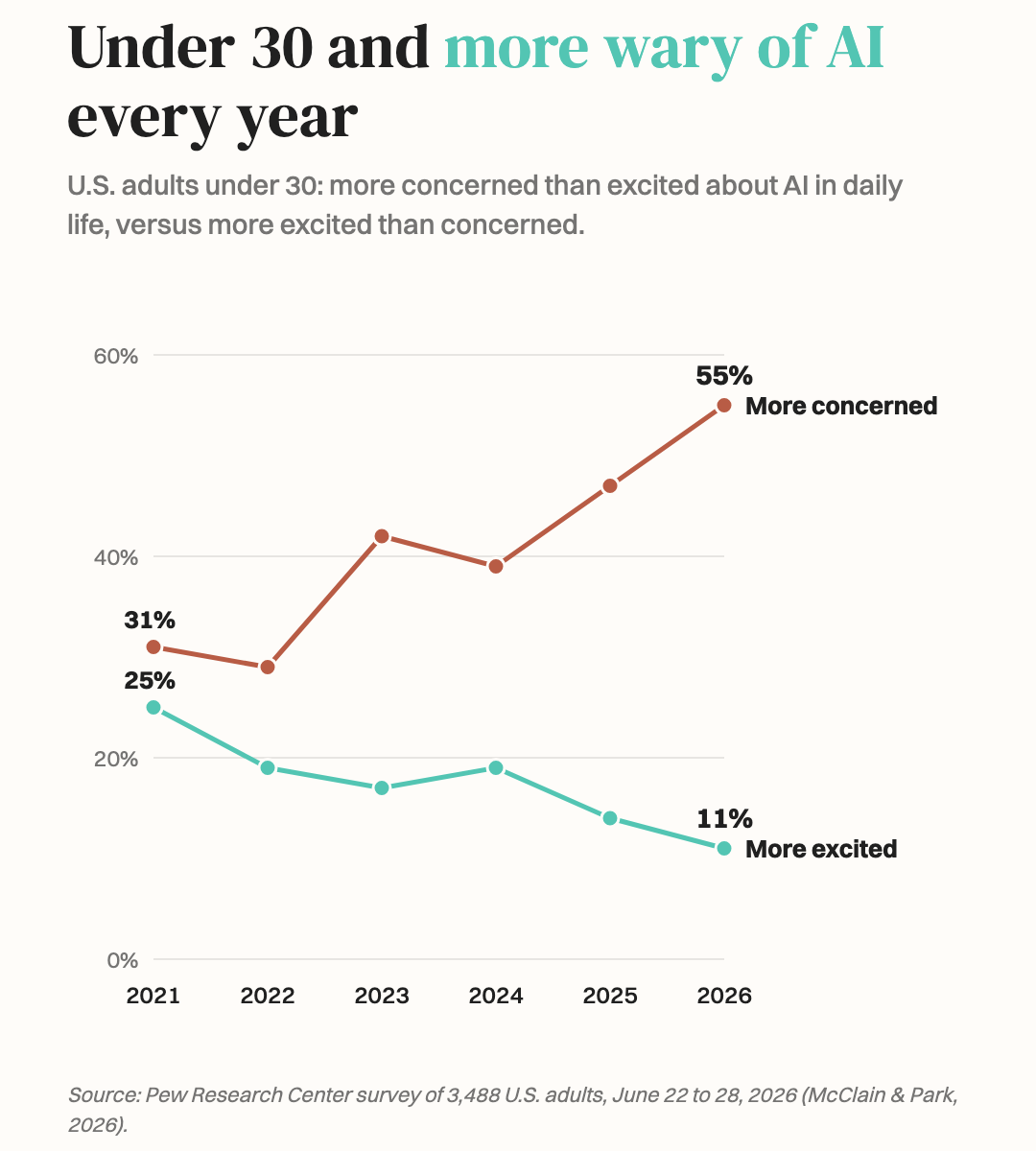
The younger you are, the more AI worries you
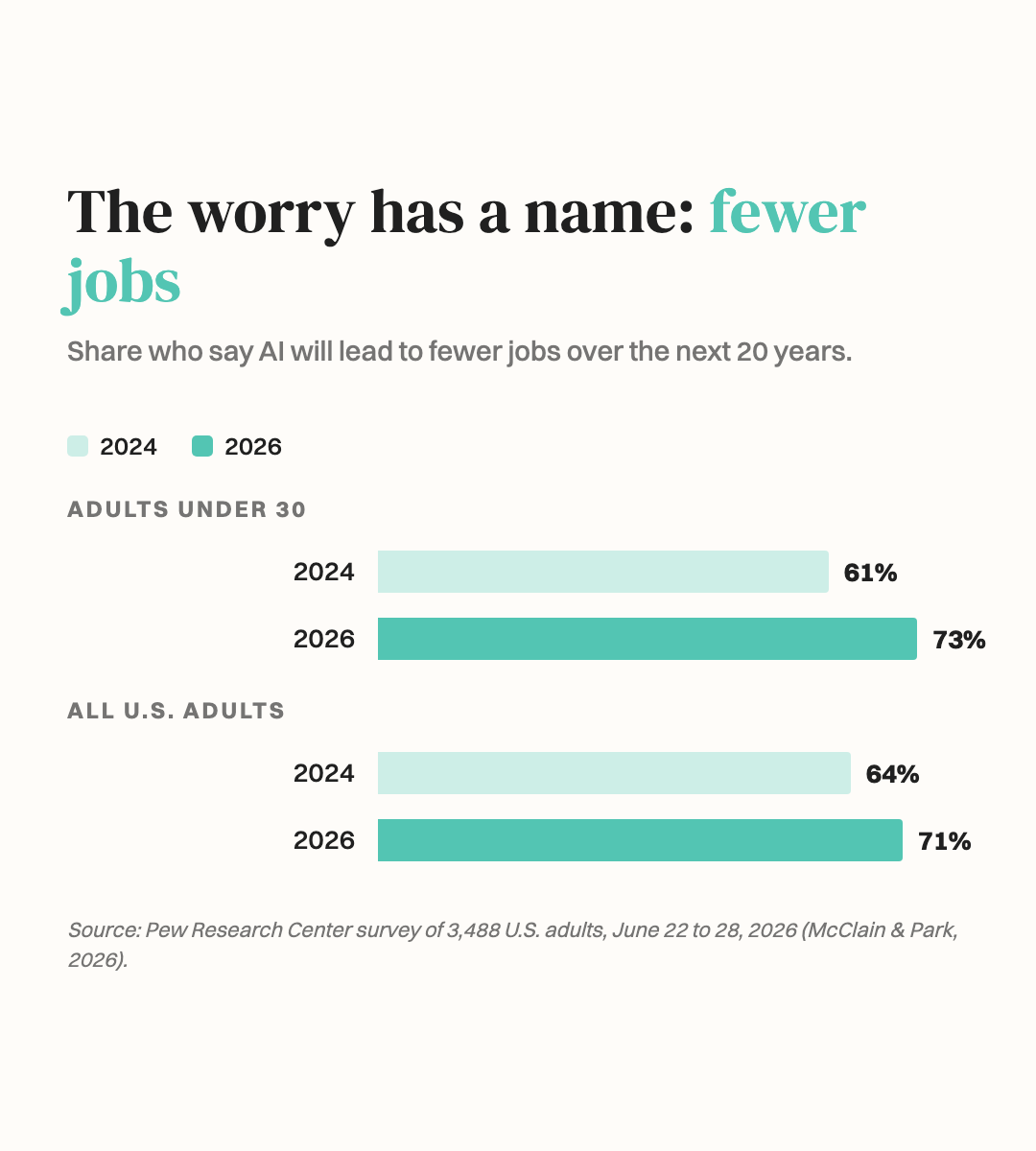
The Energy CostPew Research Center has tracked how adults under 30 feel about AI since 2021, and the line only moves one direction (McClain & Park, 2026). Back then, 31 percent said concern outweighed excitement. This June it reached 55 percent, a majority for the first time, while excitement fell to 11 percent. The sharpest fear is work itself: 73 percent of young adults now expect AI to mean fewer jobs, up from 61 percent two years ago. If AI leaves you uneasy, you're standing in the majority, not lagging behind it. Worry this widespread isn't a personal failing. It's information about how fast the ground is moving. You don't owe anyone a racing adoption curve. Calm, chosen use, at your pace and in your voice, is still adoption.
AI doesn't decide your culture. Your managers do.
The Alignment CheckGallup looked at what happens to workplace culture when AI arrives, and the honest answer is: it depends (Meinen & Mulherin, 2026). In organizations that have brought AI in, 24 percent of employees say their culture improved, 25 percent say it got worse, and about half say nothing changed. A near-even split. What tips it isn't the tool. Gallup's data points to managers: when employees feel supported through the change, culture bends toward better. When they don't, the same technology bends it the other way. If you lead people, that's worth sitting with. The rollout plan matters less than the person explaining it. AI lands on a team the way any change lands: through trust, or through the lack of it.
Hand AI your decisions and you hand it your judgment
The Identity AngleWriting in Harvard Business Review, Sudakov and Furr argue that leaders who route more and more decisions through AI risk eroding the judgment that made them valuable in the first place (Sudakov & Furr, 2026). In one field experiment they describe, 228 experienced evaluators assessed innovation-challenge submissions with and without AI input, and the AI's framing measurably pulled human judgment toward its own. The lesson isn't to refuse the tool. It's to decide, on purpose, which calls stay yours. Your judgment is not a spare part in this partnership. It's the asset your clients and your team hired. Let AI inform the decision, draft the options, surface what you'd miss. Then make the call from who you are. That's the difference between being amplified and being replaced from the inside.
Everyone expects the change. Almost no one is ready.
The Alignment CheckDeloitte surveyed leaders about AI agents, the systems built to run whole pieces of work on their own, and found a striking gap (Pogorelec, 2026). 74 percent expect at least half their business processes to be redesigned within four years. Only 16 percent say their processes are ready for that, and just 5 percent call themselves highly prepared. The barriers Deloitte names aren't technical: scattered data, thin trust in the agents, and the cost of rebuilding how work flows. I'd add one more. You can't redesign processes before you've decided who the organization is once the machines do more of the doing. Readiness isn't a software purchase. It's an identity question, answered early, while there's still time to answer it well.
Want the highlights in your inbox?
New research every week. One email, sourced and grounded in psychology.
Unsubscribe anytime.